Tech Reclaims Leadership as AI Pays Off
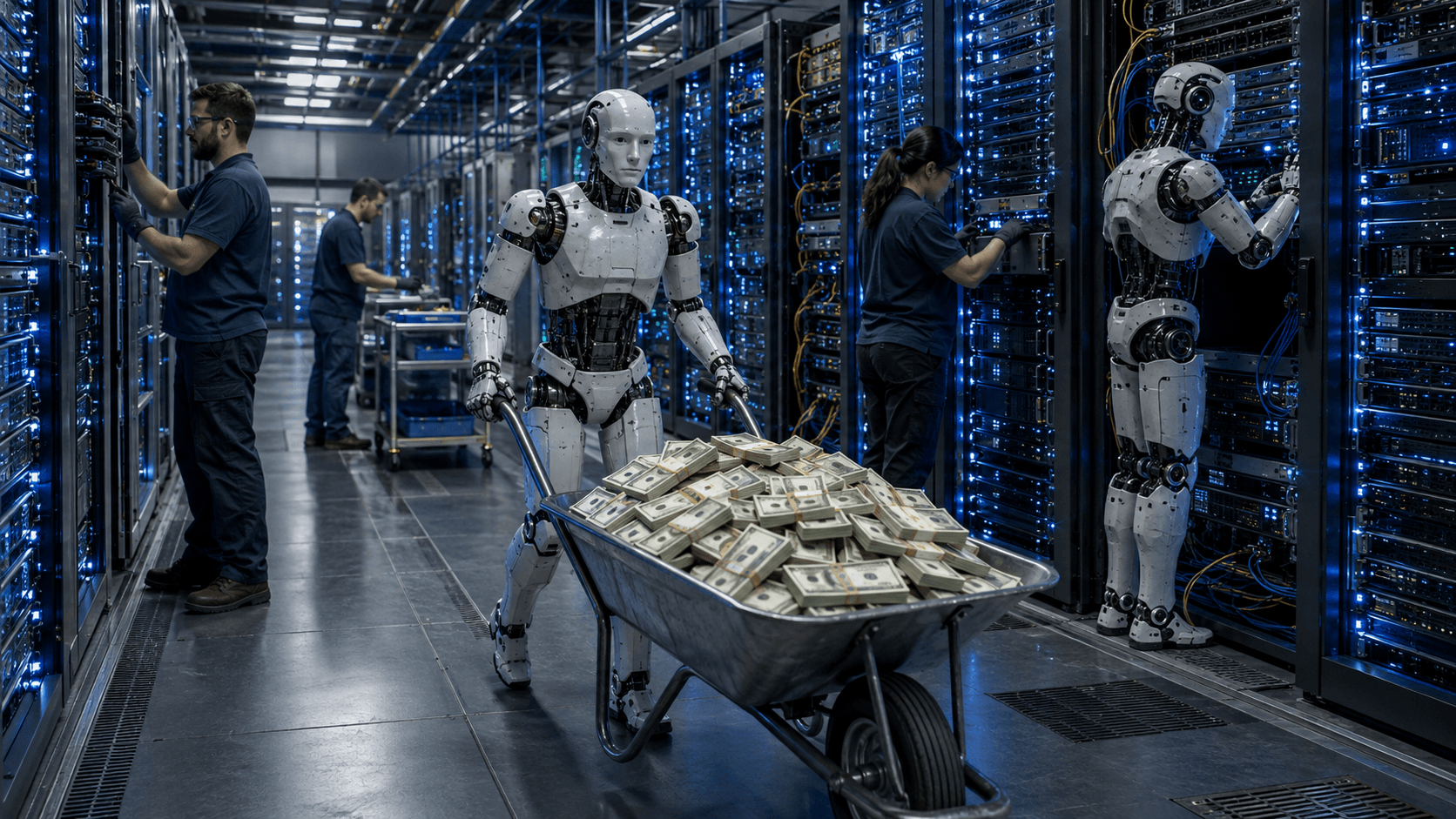
Technology stocks are reclaiming leadership as AI starts paying off.
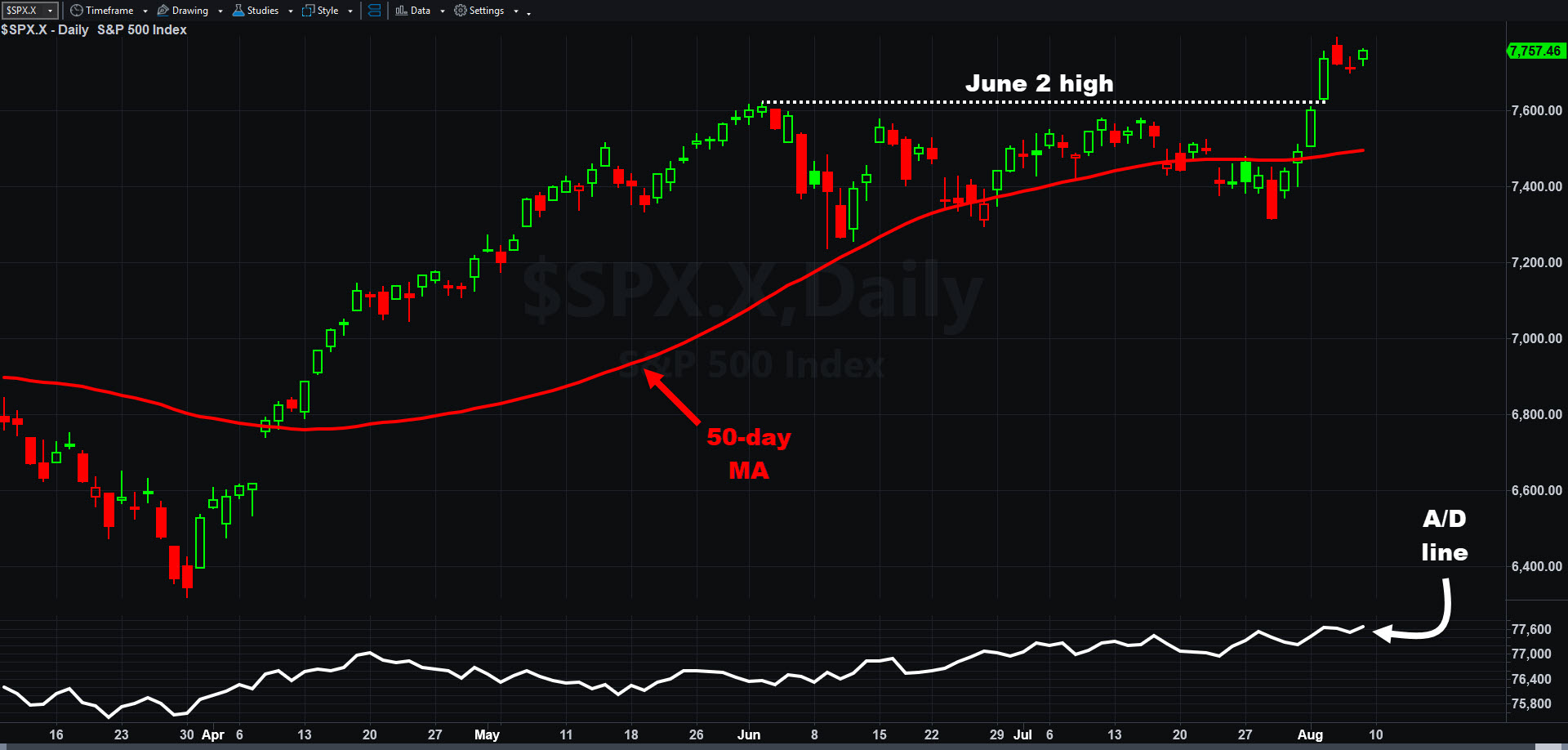
The S&P 500 rose 3.5 percent between Friday, July 31, and Friday, August 7. The index also broke out to a new all-time high for the first time in more than two months.
The technology sector led the surge with a rally of 7 percent -- its biggest weekly gain since early May. Software companies led the advance, continuing to regain some of their lost ground relative to semiconductors.
Palantir Technologies (PLTR) was a case in point, with strong earnings, revenue and guidance. The data-analysis firm kept adding customers outside of its original government market, driving its best week in 2-1/2 years. "Palantir is the only company that has demonstrated it can transform tokens into actual economic value," said Co-Founder and CEO Alex Karp.
Zebra Technologies (ZBRA) had its biggest weekly gain in 30 years after beating estimates. While the rally mostly resulted from improved operations, management describes its barcode and device-management products as "the foundation of intelligent operations." CEO William Burns also spoke of "early traction" in new computers and wearables with AI applications.
Fiber-optic companies Coherent (COHR) and Lumentum (LITE) were the first and fourth-best performing members of the S&P 500. Both have benefited from the growth of datacenters and report earnings this week.
Biggest Gainers in the S&P 500 Last Week | |
|---|---|
| Coherent (COHR) | +44% |
| Palantir Technologies (PLTR) | +40% |
| Zebra Technologies (ZBRA) | +28% |
| Lumentum (LITE) | +25% |
| Gartner (IT) | +23% |
| Source: TradeStation data | |
Gartner (IT) was another interesting case. The data analytics company lost more than half its value between early 2025 and early 2026. Some of the drop resulted from worries about AI hurting its business. Last week it rose the most in five years after shifting toward the new technology. On the conference call, CEO Eugene Hall rattled off "AI technologies and priorities: AI strategy, domain and multimodal models, AI cybersecurity, physical AI and robotics. AI cloud-to-edge processing, AI adoption cases and best practices and more."
IT's surge was similar to the previous week's moves in Cognizant (CTSH) and Workday (WDAY).
Other big tech gainers included fiber-optic company Corning (GLW), messaging company Twilio (TWLO), and software provider Atlassian (TEAM).
Airbnb (ABNB) also had its biggest one-day gain ever after earnings and revenue beat estimates. The apartment-sharing company said AI improved both its product and operations.
Jobs vs Rate Hikes
Last week also featured a strange mix of economic data that caused bond yields to decline after rising the previous two weeks.
The main item was weak job growth: ADP's private-sector report and the Labor Department's nonfarm payrolls both missed estimates. However jobless claims and unemployment were lower than expected. Challenger Gray's layoffs also hit a two-year low. Other data showed productivity rising at twice the estimate in the second quarter and unit labor costs rising less than expected.
Many economists viewed the numbers as consistent with a healthy labor market struggling to find workers -- especially as baby boomers retire.
Crude-oil inventories also rose for only the second time in the last four months amid signs of easing tensions in the Middle East. That made energy the worst-performing sector last week. It also fell behind technology as the leader on a year-to-date basis, according to TradeStation data.
The economic data and lower oil prices reduced the odds of a September Federal Reserve rate hike from 67 percent at the end of July to 43 percent last week, according to CME's FedWatch tool.
Gold and Silver Rally
The dovish pivot hammered the U.S. dollar and drove big gains in precious metals like gold and silver. Gold miners had their biggest weekly gain since 2008.
Cloud-computing, cybersecurity, homebuilders and biotechs were also strong. Materials rose the most since early last year.
Space Exploration Technologies (SPCX) bounced 23 percent to end a four-week slide.
Biggest Decliners in the S&P 500 Last Week | |
|---|---|
| Trade Desk (TTD) | -24% |
| DaVita (DVA) | -23% |
| Western Digital (WDC) | -20% |
| Honeywell Aerospace (HONA) | -18% |
| Texas Pacific Land (TPL) | -15% |
| Source: TradeStation Data | |
All told, 45 members of the S&P 500 had double-digit gains last week. Only 11 fell 10 percent or more.
The index's five worst performers all dropped after announcing quarterly results.
Charting the Market
The S&P 500 broke out to a new all-time high for the first time in more than two months. Traders may see few bearish signs as multiple indicators turned more positive.
First, the advance/decline line hit a new all-time high, which may reflect positive breadth.
Second, the moving average convergence/divergence (MACD) oscillator turned positive. Wilder's Relative Strength Index (RSI) also hit its highest level since early June. Those signals could indicate short-term bullishness.
Third, technology leading the move could be viewed as confirming the advance.
Next, Cboe's volatility index (VIX) ended the week at the lowest level since late January. That may reflect risk appetite and a lack of fear.
The Week Ahead
Earnings reports slow this week, but there is still some important economic data.
Barrick Mining (B) and Hims & Hers Health (HIMS) announce results today.
Tomorrow brings existing home sales and results from Rackspace Technology (RXT), Super Micro Computer (SMCI) and CoreWeave (CRWV).
The consumer price index (CPI) inflation report at 8:30 a.m. ET on Wednesday morning is arguably the most important event this week. Crude oil inventories follow, along with results from Cisco Systems (CSCO) and COHR.
Thursday features the producer price index (PPI), jobless claims and earnings from Applied Materials (AMAT).
Retail sales and consumer sentiment are on Friday morning.
.jpg&w=3840&q=75)