
Is the Market's Leading Industry Breaking Out?
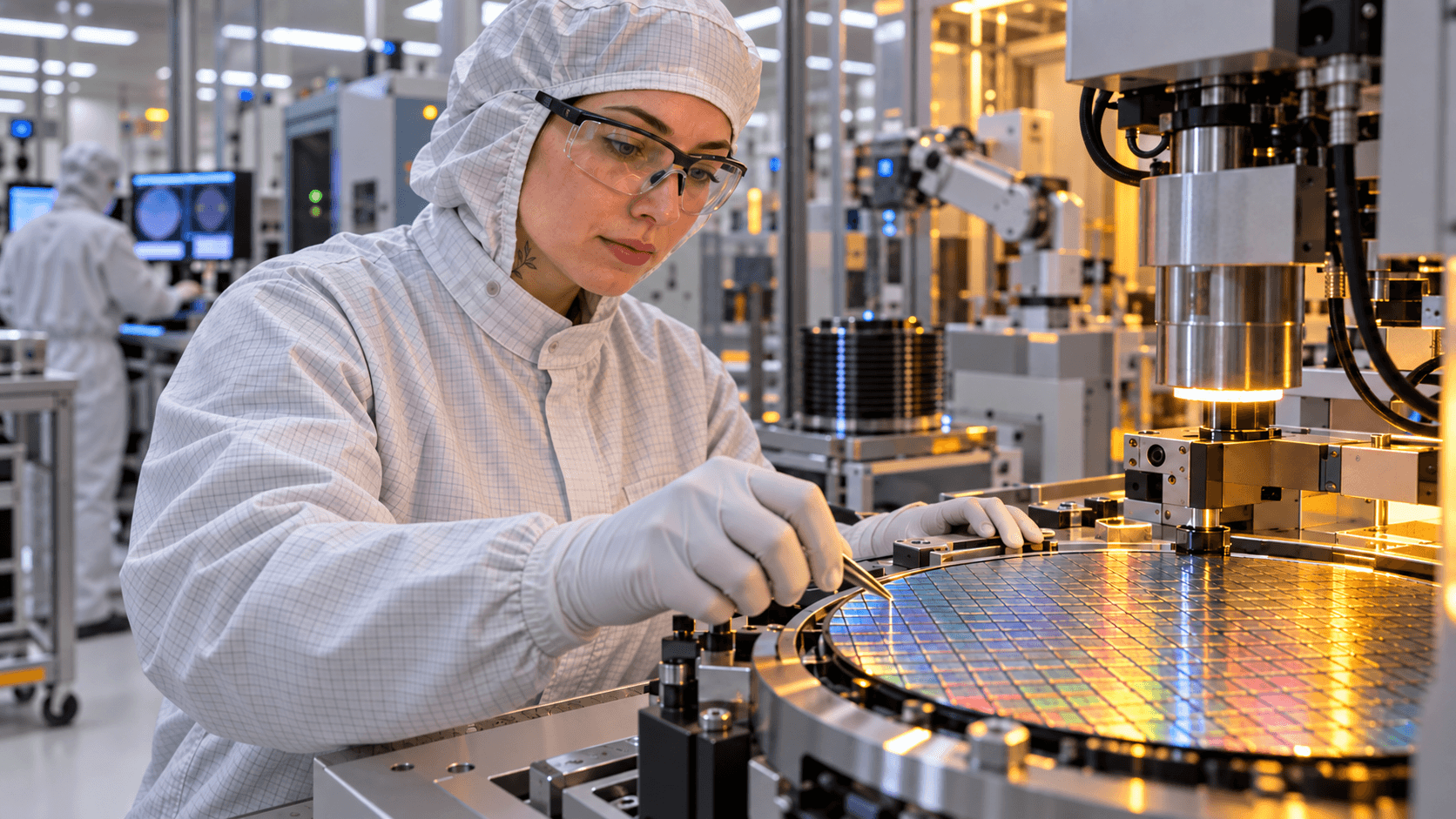
Chip stocks are jumping, and some traders may see opportunities in coming sessions.
The Philadelphia Semiconductor Index rallied 4.3 percent yesterday, its biggest gain since August 4. The index also closed above a falling trendline and its 50-day moving average, which could suggest prices are ending a period of consolidation.
Arm (ARM), Intel (INTC) and Qualcomm (QCOM) rose on optimism about agentic AI increasing demand for CPUs. The idea is that AI agents perform multistep tasks, requiring CPUs to coordinate models, applications and data. That could increase the number of CPUs needed versus GPUs (which run the AI models).
Some of the move resulted from growth in Muse AI, the app from Meta Platforms (META) that has surged in popularity in the last two weeks. The social-media company is expected to keep the focus on agentic AI at its Meta Connect conference on Wednesday and Thursday. (META also jumped 11 percent yesterday, its biggest gain in more than two years.)
Advanced Micro Devices (AMD), which supplies both CPUs and GPUs, reached a $1 trillion market capitalization for the first time ever.
Semiconductors have led the S&P 500 since late 2022. They also have the fastest projected earnings growth (aside from oil and gas companies), according to FactSet. News in recent weeks, like results from Dell Technologies (DELL) and Oracle (ORCL), seemed to bolster optimism about demand.
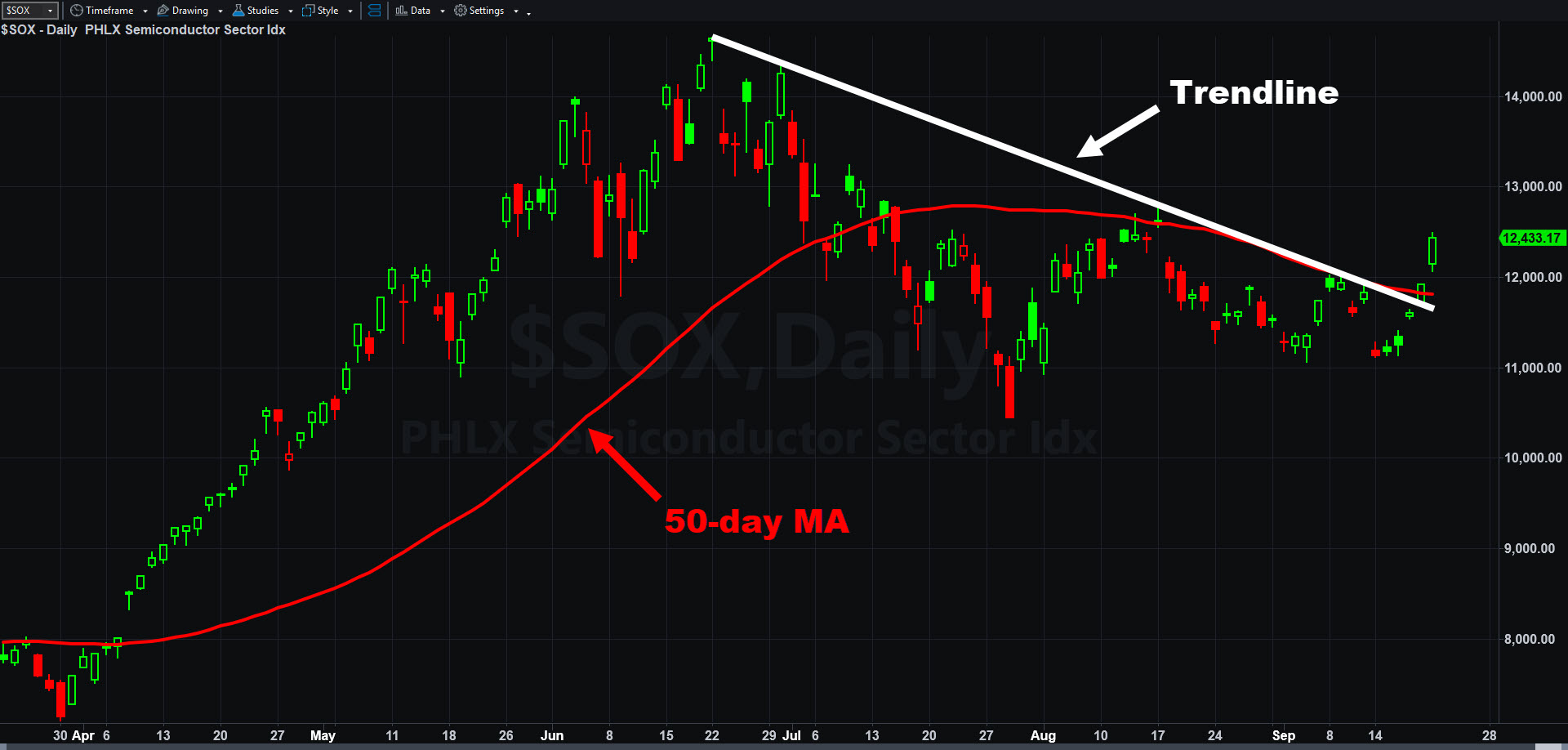
That could make yesterday's price action especially important. Combined with strength in META and the broader Nasdaq-100, are buyers regaining interest in chip stocks and the AI trade?
Aside from Meta Connect, these approaching catalysts may impact the chip stocks:
QCOM's Snapdragon Summit (today through Thursday)
- Micron Technology's (MU) earnings report after the closing bell on September 30
The table below shows some prominent companies potentially involved in the group. Notice how several are active underliers in the options market, which could help some traders take positions with calls and puts.
| Company | Market Value | Average Options Volume |
|---|---|---|
| Nvidia (NVDA) | $5.4T | 3.4M |
| Micron Technology (MU) | $1.2T | 915,000 |
| Meta Platforms (META) | $1.7T | 805,000 |
| Intel (INTC) | $574B | 802,000 |
| Advanced Micro Devices (AMD) | $1T | 505,000 |
| Broadcom (AVGO) | $1.7T | 345,000 |
| Super Micro Computer (SMCI) | $26B | 250,000 |
| Taiwan Semiconductor Manufacturing (TSM) | $2T | 105,000 |
| Qualcomm (QCOM) | $187B | 80,000 |
| Arm (ARM) | $294B | 63,000 |
| Source: TradeStation Data |
Performance data shown reflects past performance and is no guarantee of future performance. The information provided is not meant to predict or project the performance of a specific investment or investment strategy and current performance may be lower or higher than the performance data shown. Accordingly, this information should not be relied upon when making an investment decision.
Options trading is not suitable for all investors. Your TradeStation Securities' account application to trade options will be considered and approved or disapproved based on all relevant factors, including your trading experience. See www.TradeStation.com/DisclosureOptions. Visit www.TradeStation.com/Pricing for full details on the costs and fees associated with options.
Margin trading involves risks, and it is important that you fully understand those risks before trading on margin. The Margin Disclosure Statement outlines many of those risks, including that you can lose more funds than you deposit in your margin account; your brokerage firm can force the sale of securities in your account; your brokerage firm can sell your securities without contacting you; and you are not entitled to an extension of time on a margin call. Review the Margin Disclosure Statement at www.TradeStation.com/DisclosureMargin.
.jpg&w=3840&q=75)