Stocks Teeter on Growing AI Costs
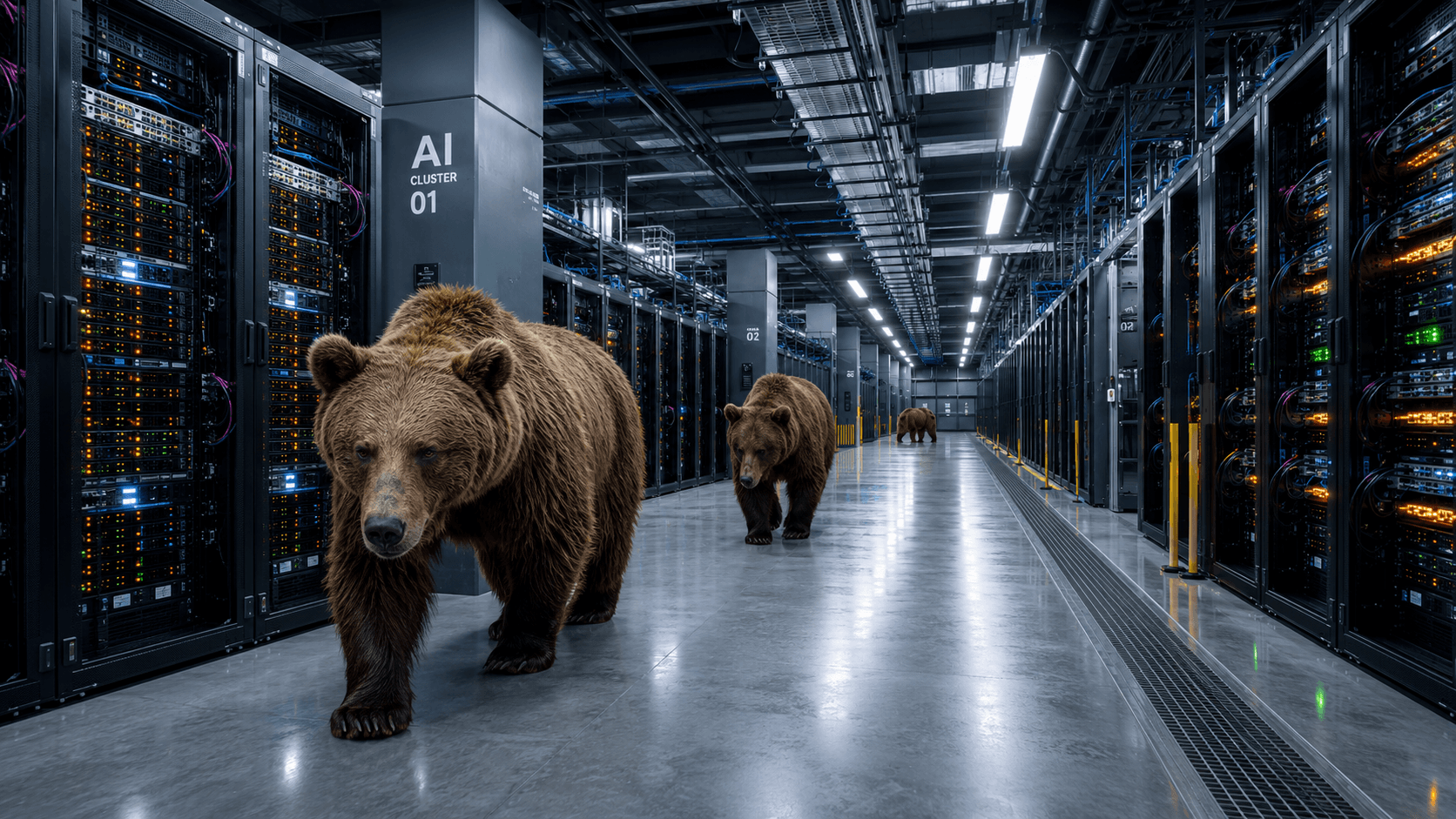
Stocks are teetering as risks increase. There could even be doubts about the economics of AI.
The S&P 500 slid 0.6 percent between Friday, July 17, and Friday, July 24. The index registered back-to-back negative weeks for the first time since March. Bond yields also climbed as investors brace for potential rate hikes by the Federal Reserve.
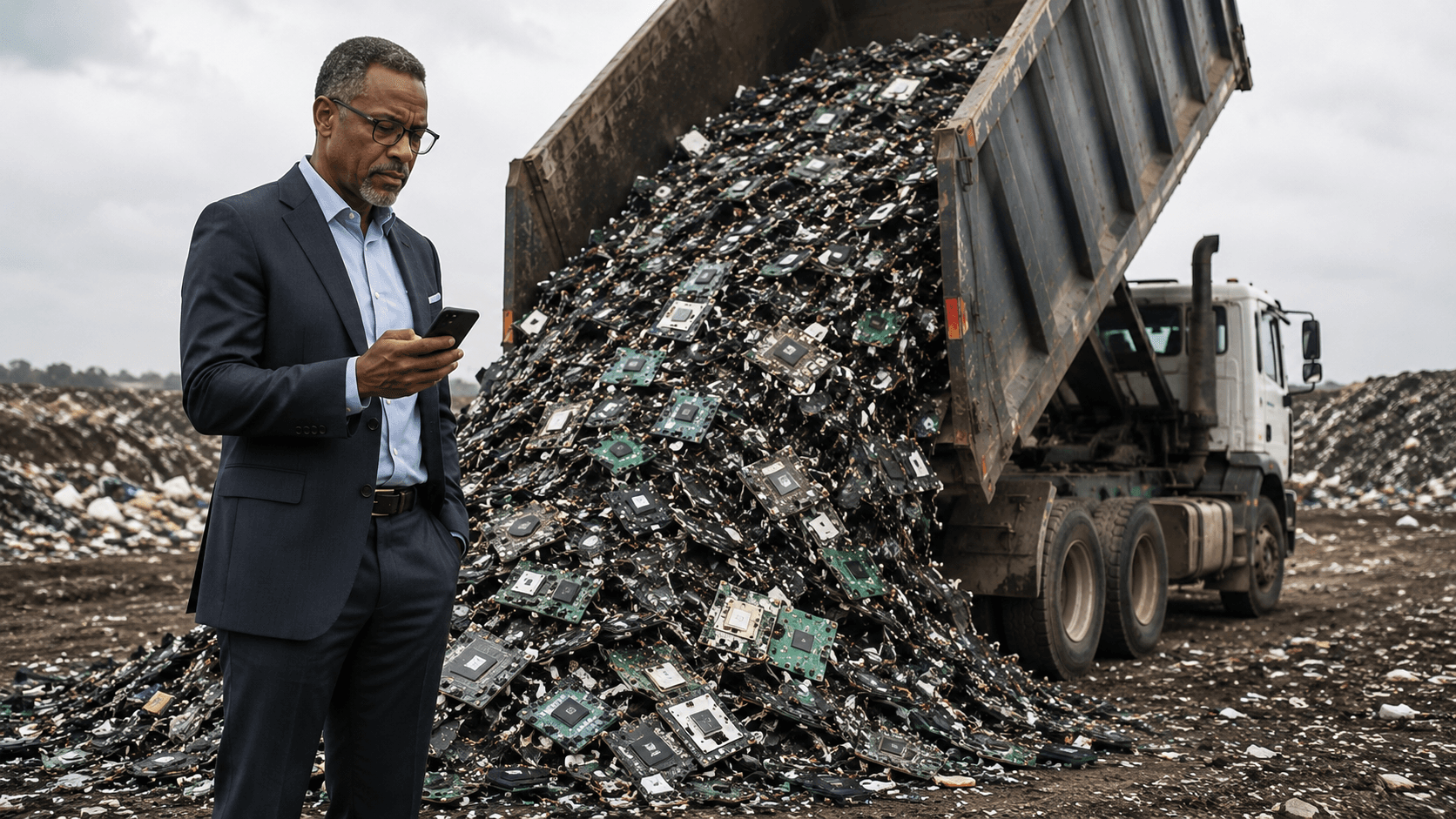
Alphabet (GOOGL) was the big story last week. Earnings, revenue and Cloud growth beat estimates. However, free cash flow fell more than expected and turned negative for the first time in its 22 years as a public company. The stock fell 7.8 percent in response, casting a pall across hyperscalers that are spending aggressively on AI infrastructure. Tesla's (TSLA) free cash flow also fell into the red, contributing to the EV maker's biggest weekly loss in 2-1/2 years.

The issue is earnings versus free cash flow. Money spent on datacenters and chips now reduces "net income" for quarters and years into the future because it's depreciated on a schedule. Free cash flow, on the other hand, drops the same quarter the money is actually spent.
This has multiple effects:
- Current earnings may be viewed as overly rosy.
- Investments made today will hurt future profits because they're recognized as expenses later -- a looming "depreciation" wall.
- Cash spent on equipment can't be used for stock buybacks. (GOOGL has stopped repurchasing its shares for the last two quarters.)
- Companies are borrowing to pay for the capex at a time of rising interest rates.
- Falling share prices may pressure companies to slow investment. That, in turn, could hurt the same chip and hardware companies that have driven the market higher.
Another issue weighed on GOOGL: More than half its profit came from gains on companies like Space Exploration Technologies (SPCX). Could that contribution turn negative with SPCX down 33 percent so far this quarter? (TSLA also faces company-level issues because tax credits are fading as weaker pricing hurts margins.)
"The transition from asset-light to asset-heavy models requires unprecedented levels of investment and capital raising," Moody's Ratings said in a credit report on Wednesday.
Biggest Decliners in the S&P 500 Last Week | |
|---|---|
| Tesla (TSLA) | -18% |
| Rollins (ROL) | -15% |
| Moderna (MRNA) | -13% |
| MSCI (MSC) | -12% |
| C.H. Robinson (CHRW) | -11% |
| Source: TradeStation data | |
Hyperscaler Pressures
GOOGL's drop not only illustrated the growing disconnect between earnings and free cash flow. It also highlighted ongoing concerns about how AI spending will impact corporate finances.
Meta Platforms (META), which reports earnings on Wednesday afternoon, dropped 7.9 percent. Amazon.com (AMZN), which reports a day later, declined 6.1 percent. Oracle (ORCL) fell 9 percent to its lowest level in more than two years.
That made consumer discretionaries and communications the worst-performing sectors last week. Both groups peaked before mid-February and failed to break out along with the broader S&P 500 in April. That may reflect longer-term weakness in the large-cap growth stocks that have led the market for years.
Consider this point: Of 11 companies in the S&P 500 valued over $1 trillion, only three ended last week above their 50-day moving averages. Eli Lilly (LLY) is a healthcare stock. Berkshire Hathaway (BRK.B) is mostly an insurance stock. Apple (AAPL), the only technology company, has the least exposure to AI.
Here Comes the Fed
Aside from earnings, the Fed issues an interest-rate decision on Wednesday afternoon. CME's FedWatch tool showed a 36 percent chance of a 25 basis point hike on Friday, up from a 13 percent chance a week earlier. Yields have risen as renewed conflict in the Middle East drives oil prices higher. The strong economy has also made investors think rate hikes are more likely. For example, initial jobless claims dropped more than expected to a new multiyear low. S&P Global's Global PMI for July also noted that selling prices rose at the fastest pace in almost four years.
Expectations for higher rates and fuel products made energy the best-performing sector last week. It's also regained its title as the top sector this year, outpacing technology 33 percent to 22 percent.
Oil could remain an important catalyst this week as the U.S. and Iran vie for control of the Strait of Hormuz. Houthi strikes against Saudi Arabia in the Red Sea could also have an impact.
Utilities, industrials, materials and real estate also rose more than 1 percent last week. Those gains -- contrasted with weakness in technology, communications and consumer discretionary -- may reflect a shift to value stocks. Gold miners also rose as bullion tried to bounce at $4,000.
Software companies, solar energy and retailers struggled.
Biggest Gainers in the S&P 500 Last Week | |
|---|---|
| Super Micro Computer (SMCI) | +24% |
| Wabtec (WAB) | +15% |
| Lockheed Martin (LMT) | +15% |
| Digital Realty Trust (DLR) | +14% |
| International Paper (IP) | +12% |
| Source: TradeStation data | |
Super Micro Computer (SMCI) rose the most in the S&P 500 on strong preliminary results. Railroad supplier Wabtec (WAB), defense contractor Lockheed Martin (LMT) and datacenter owner Digital Realty (DLR) also climbed after announcing quarterly numbers.
Charting the Market
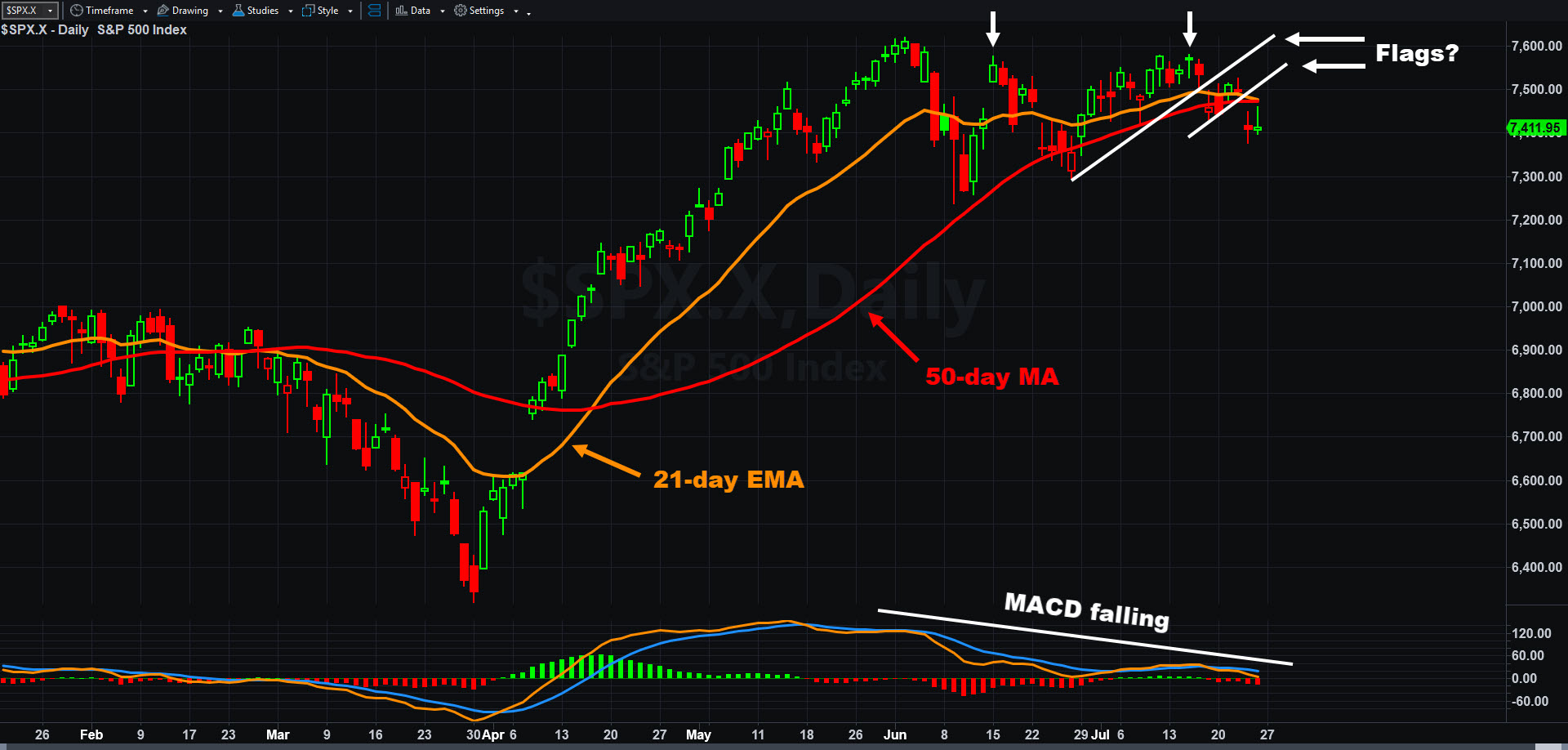
The S&P 500 hasn't made a new high since June 2. Some traders may see increased risk of a drop if it remains rangebound.
The index has slipped under its 50-day moving average and its 21-day exponential moving average. Staying below them may reflect weakening momentum.
The negative moving average convergence/divergence (MACD) oscillator could paint a similar picture.
Prices also stalled around 7,580 in mid-June and again a month later. They then broke under 7,500 and consolidated for four sessions before dropping toward 7,400. That may be viewed as evidence of an emerging downtrend.
Aside from big stock indexes like the S&P 500 and Nasdaq-100, traders could also focus on the charts of crude-oil and the 10-year Treasury yield. Upside in either could potentially weigh on equity-market sentiment.
The Week Ahead
This week is the busiest earnings period for the S&P 500, with more than one-third of the index's members issuing results. The list includes four of the seven most valuable companies: AAPL, Microsoft (MSFT), AMZN and META. It also has the Fed meeting, inflation data and may bring more details on tariffs announced by President Trump last week.
Today's items include durable-goods orders and results from Celestica (CLS) and Applied Digital (APLD).
Tuesday brings consumer confidence, along with earnings from KLA (KLA), Visa (V), Seagate Technology (STX), Corning (GLW), Boeing (BA) and Coca-Cola (KO).
Wednesday is the big day, with crude-oil inventories at 10:30 a.m. ET, the Fed's statement at 2 p.m. and Chairman Kevin Warsh's press conference 30 minutes later.
MSFT, META, Qualcomm (QCOM), Arm (ARM), Lam Research (LRCX), Starbucks (SBUX) and Robinhood Markets (HOOD) report after the closing bell on Wednesday.
Thursday brings the personal consumption expenditures (PCE) inflation reading, along with jobless claims. AAPL and AMZN report in the postmarket.
Results are due from AbbVie (ABBV), Moderna (MRNA), Chevron (CVX) and Exxon Mobil (XOM) on Friday morning.
.jpg&w=3840&q=75)