America: A Nation Built on Calculated Risk
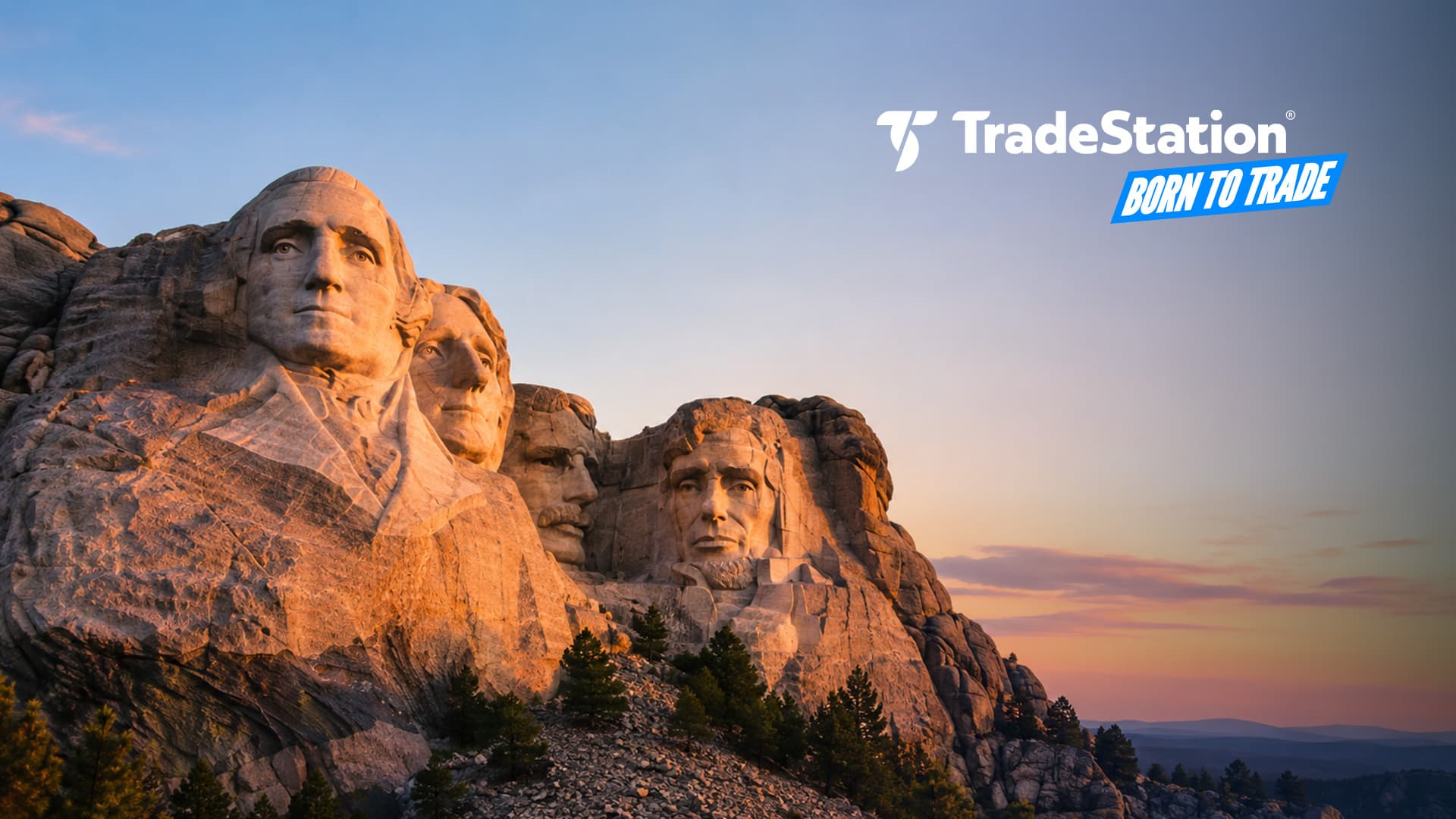
America was built on a series of trades. Balancing risks, every founding decision was effectively a call between certainty or possibility, the known or the unknown.
A King for a Constitution. Mercantilism for free markets. Dependence for an open frontier.
That instinct didn't end at the founding. It became the country's operating system. America was built by people willing to make calculated bets and supported by a system designed to reward them when those bets paid off. The risks got bigger, more ambitious, more consequential. The country has become the cumulative settlement of two and a half centuries of American trading.
If you've ever placed a trade in the markets, especially in the U.S. where TradeStation is headquartered, you're participating in something that started in 1776.
The American trade that made others possible
The Constitution itself was a trade-off. The Articles of Confederation gave the states near-total independence and the federal government almost no teeth. By 1787, it was clear the system wasn't working as hoped. The trade: surrender some state sovereignty for a stronger union.
Two specific provisions buried in the Constitution did most of the heavy lifting.
The first was the bankruptcy clause. Article I, Section 8 gave Congress the power to establish uniform bankruptcy laws across the country.1 In most of the world at the time, business failure meant ruin. The bankruptcy clause set up the legal foundation for a country where you could fail, dust yourself off, and try again. Risk-taking became a survivable activity.
The second was Alexander Hamilton's debt assumption plan in 1790. The federal government took on the war debts of the individual states.2 It was politically explosive at the time, but it created something the country had never had: unified federal credit. Suddenly the United States could borrow as a single nation. Investors at home and abroad could buy American debt without parsing state-by-state risk.
Together, these moves built the financial spine of the country. They created a system that legally protected risk-taking and economically enabled it. America didn't just declare itself free in 1776. Over the next decade, it engineered a system that encouraged people to bet on the future.
Every American trade that followed was made possible by that one.
The Louisiana Purchase: 3 cents an acre
In 1803, Thomas Jefferson took a risk that ultimately doubled the size of the country.
For $15 million, the United States bought 828,000 square miles from France. That's roughly 3 cents an acre.3 It was one of the most consequential land deals in history. In 2026 dollars, the entire territory cost less than a single Manhattan skyscraper sells for today.
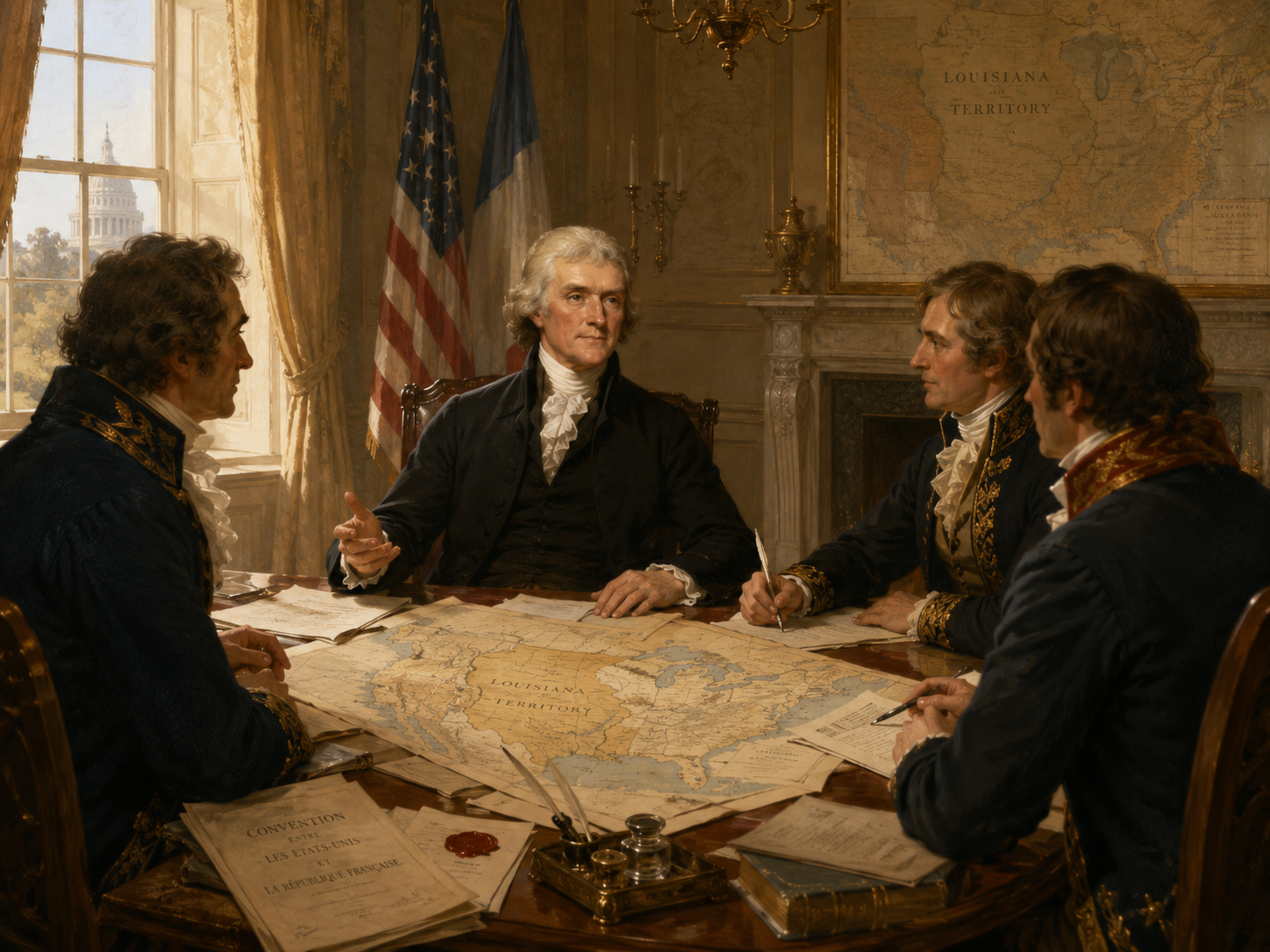
But Jefferson wasn't sure he had the authority to make the deal. The Constitution didn't explicitly grant the president the power to acquire foreign territory. He considered seeking a constitutional amendment, then decided not to wait.4 The Louisiana Purchase was more than a deal. It was a calculated risk that the country would grow into the opportunity.
It was only possible because of the financial system Hamilton had built a decade earlier. The United States borrowed most of the $15 million from British and Dutch banks.5 Money flowed into American hands because American credit was sound. The bankruptcy laws, the unified currency, the federal debt assumption: all of it converged in 1803 to make the largest land deal in American history financeable.
Without the purchase, the western boundary of the United States would have remained at the Mississippi. The Rocky Mountains, the Pacific Northwest, the Great Plains wouldn't have been American soil. The country would have looked very different.
Jefferson didn't know any of that would happen. But to him, it was a risk worth taking.
Capital arrived before the people
In most of the world, railroads connected cities that already existed. In America, the opposite happened.
That single difference explains more about American economic history than almost any other fact. European capital was an administrator. It served existing population centers, existing trade routes, and existing demand. American capital was a scout. It went out ahead, laid track across territory that had no customers yet, and bet that people would arrive. They did.
It wasn't accidental. James J. Hill built the Great Northern Railway across the northern plains in the 1880s with almost no federal land grants on the conviction that he could create demand by building the line. He sold land cheaply to immigrants, helped them learn dryland farming, and underwrote the development of the towns that would eventually fill his trains. Hill built a railroad, and then he helped build up the customers for it.6
Henry Flagler ran the same play down Florida's East Coast in the 1890s, extending his railway south through near-empty country and building destination hotels at the end of each new line. Palm Beach and Miami exist in their modern form because Flagler built a railroad to them before they were there.7 Telegraph lines were strung across the continent ahead of the populations that would need them. Andrew Carnegie's steel mills were built at industrial scale before there was clear demand for industrial-scale steel.8 Then the railroads, skyscrapers, and bridges arrived to consume it all.
American capital didn't ask permission. It moved first. It took a risk on growth that hadn't happened yet, and that judgement repeatedly turned out to be right.
Builders who backed themselves
If America's founding was a trade, American business history is the catalog of risk-taking that followed. Every great American company started as someone risking certainty for the chance at building something bigger. And the market decided who was right.
In the 1880s, Thomas Edison backed direct current. Nikola Tesla, working for George Westinghouse, favored alternating current. They were two of the most brilliant engineers of their generation, and they took opposing positions on the same question: how should America be electrified?
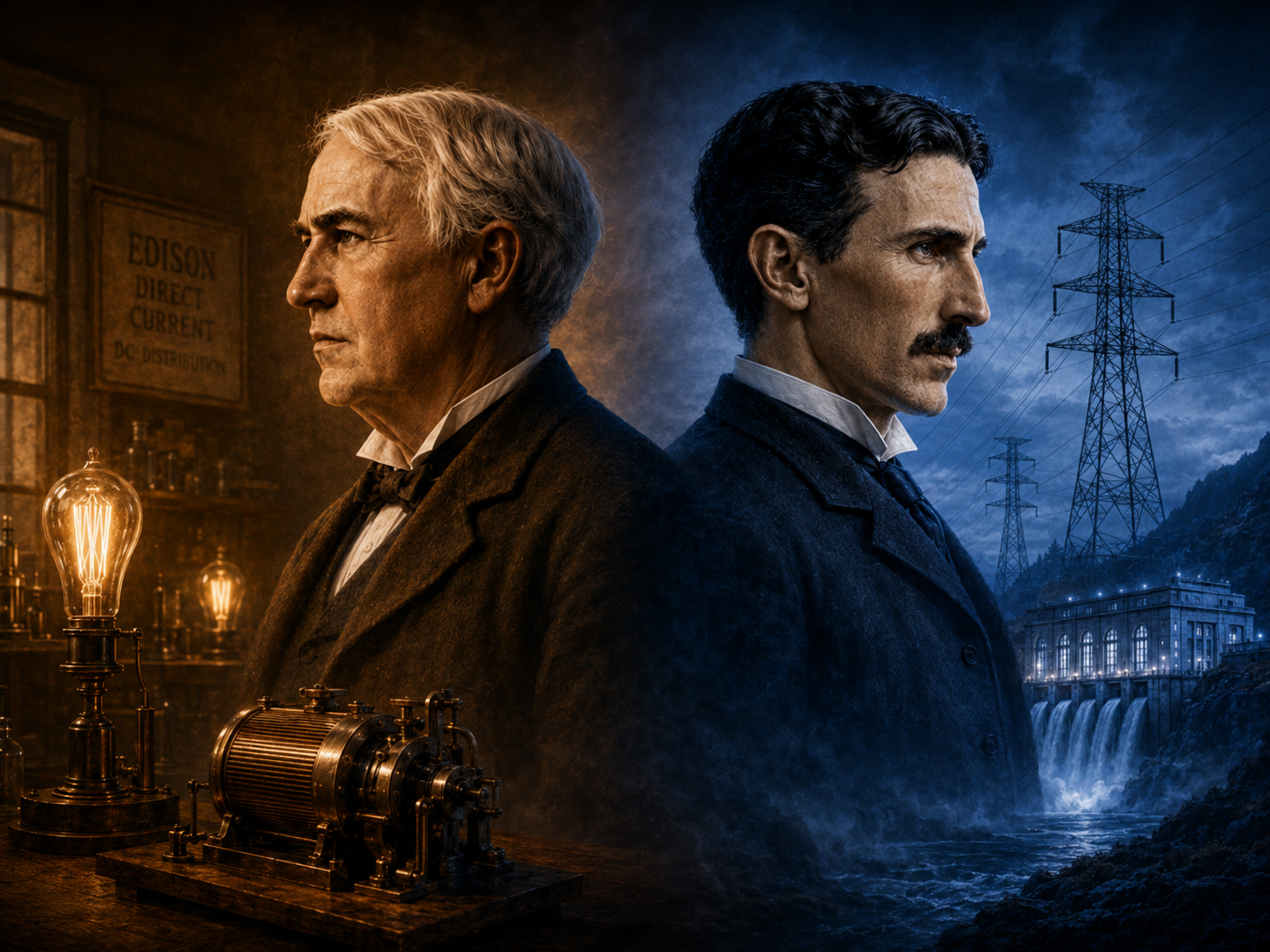
Edison was already famous. He had the establishment behind him. He waged a public campaign against AC that bordered on theatrical, including grim demonstrations of its dangers. Tesla and Westinghouse had less name recognition and worse press. But AC could be transmitted over long distances with much less power loss, and the country was vast. When the 1893 World's Fair in Chicago was electrified with Westinghouse's AC system, the question was effectively settled. American power grids run on AC to this day.9
The market arbitrated. Edison was right that DC was safer at short range. Tesla was right that AC scaled. America didn't pick a winner by committee. It let two competing views play out. Both still exist for different applications.
A century later, the same pattern repeated in software. Bill Gates backed an open ecosystem where Microsoft Windows would be licensed to anyone who built hardware. Steve Jobs chose a closed one where Apple built the hardware, the software, and eventually the services as a single integrated system. They made opposite strategic calls and both became among the most successful entrepreneurs in history.
America didn't have to choose. The market did. And, like the electrification question, the market said both ideas were right, for different reasons, in different segments.
This is the trade America offers: stand by your idea, run it into the market, let demand decide.
The trade that changed everything: ownership for everyone
America took one more risk that mattered more than any of the others. It traded the centralized certainty of exclusive ownership of enterprise for the often decentralized and less certain broad ownership of enterprise. The country wasn't only built by businesses. It was built so anyone could own them.
Through most of human history, ownership of productive enterprise was reserved for the wealthy, the well-connected, or the politically protected. America's most consequential innovation may be the gradual democratization of that ownership.
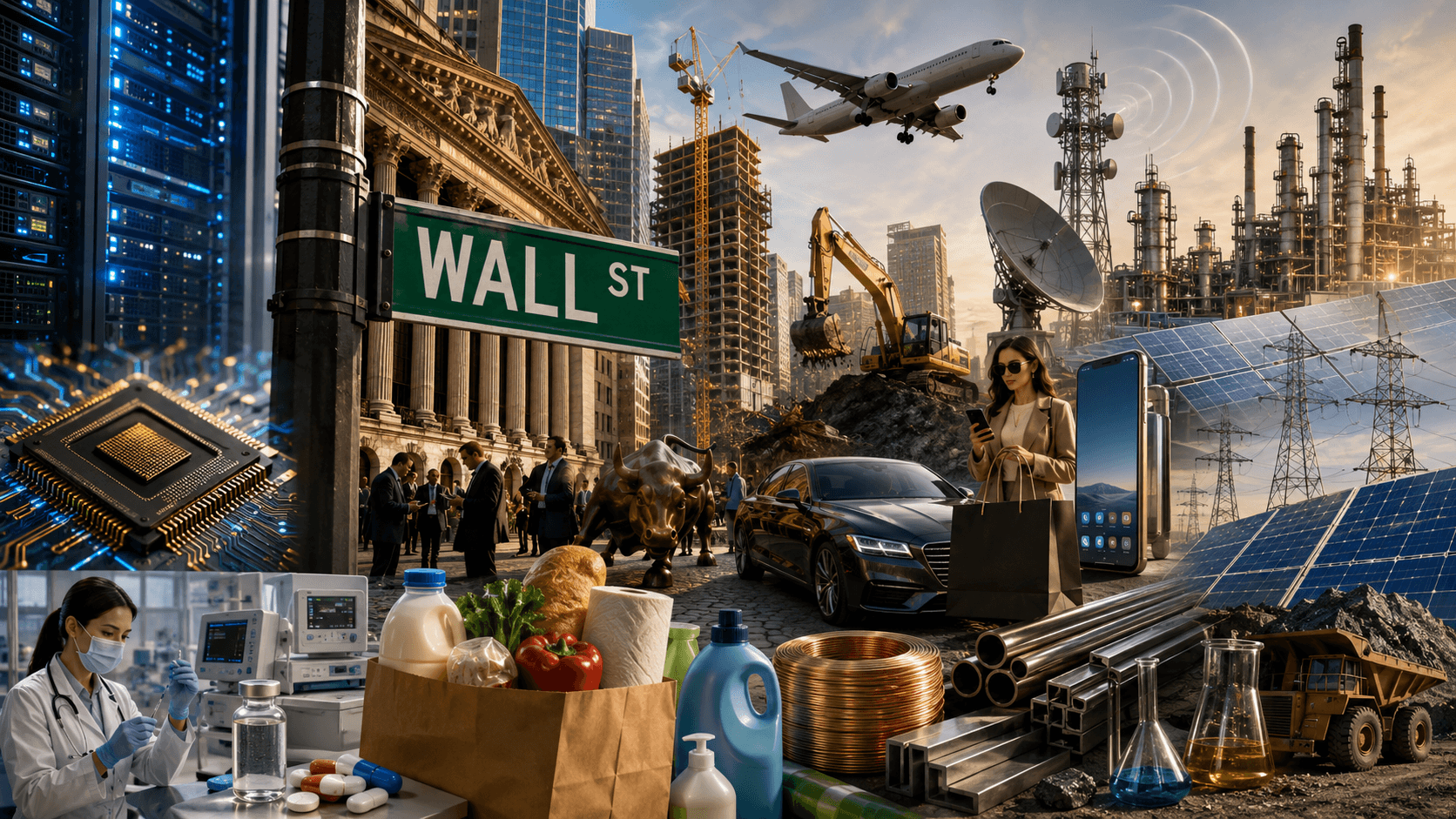
The Buttonwood Agreement of 1792 created a formal stock exchange under a tree on Wall Street.10 For most of the next century, equity ownership was still largely a rich person's activity. But the institutions kept evolving. Mutual funds in the 1920s gave middle-class Americans pooled access to diversified portfolios.11 Discount brokerages in the 1970s broke the price barrier.12 Online trading in the 1990s broke the access barrier. Mobile platforms in the 2010s broke the friction barrier.
The result is structurally different from most of the world. A majority of American households now own equities, directly or through retirement accounts.13 That participation rate isn't a coincidence. It's the product of two centuries of deliberate risks that ultimately lowered the barriers between American workers and the American companies their labor was helping to build.
America didn't just build great companies. It built a system where ordinary Americans could own pieces of them and benefit when those pieces appreciated.
The individual trade
The American trading story doesn't end in history books. There are examples all around us. William and Ralph Cruz are two of them.
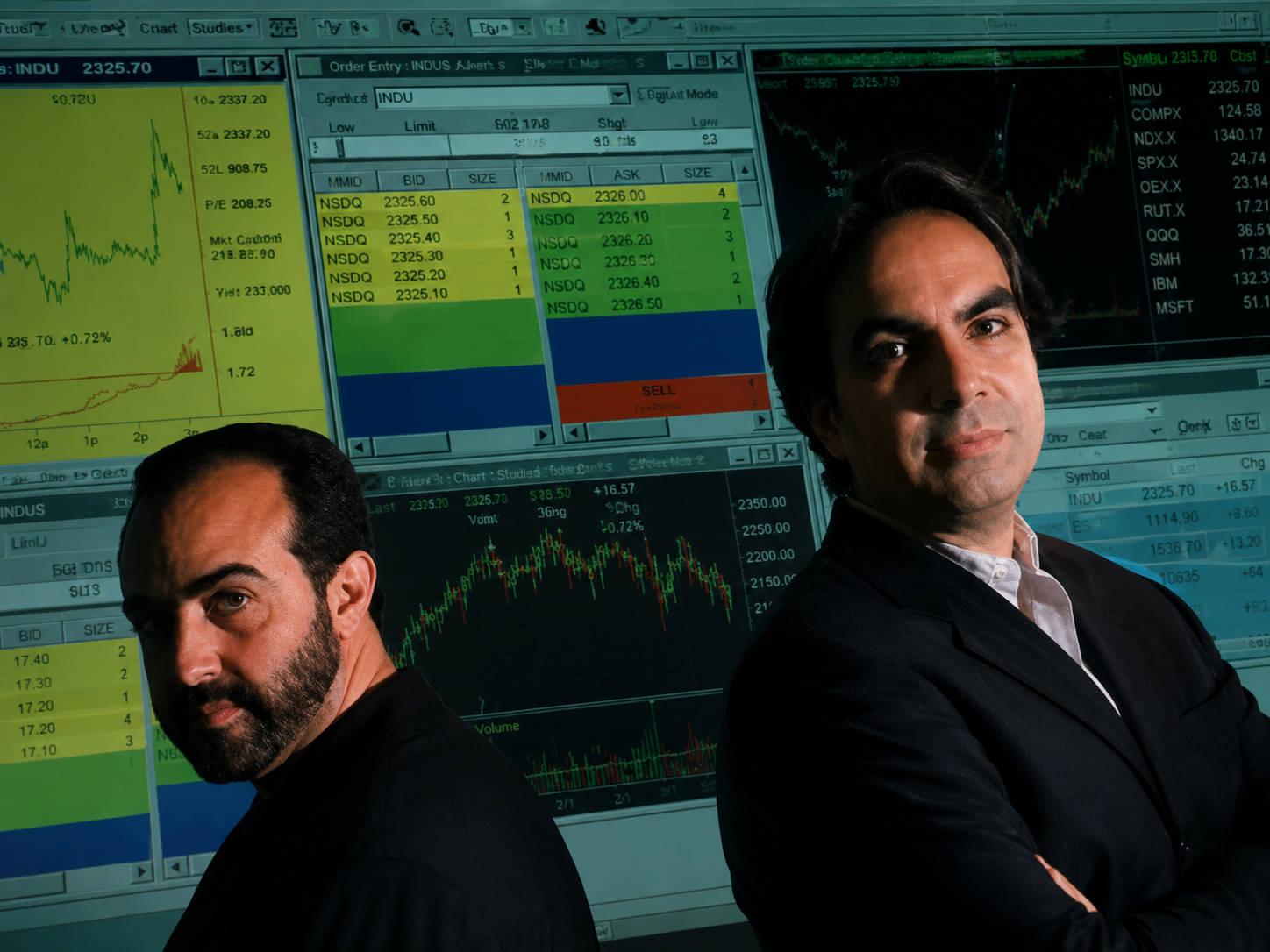
The Cruz brothers were born in Cuba. The system they grew up in was centralized, restricted, hostile to private enterprise and individual risk.
They came to America. In 1982, they started Omega Research, a software company built on a thesis that wasn't yet obvious: that individual traders, given institutional-grade tools, would use them.14 For most of brokerage history, professional-quality analytics, charting, and execution were reserved for institutional desks. The Cruz brothers built a platform that made those tools available to anyone willing to learn them. The company became TradeStation.
Today, TradeStation continues that work. Innovations like TradeStation MCP continue to lower the friction between individuals and the markets that fund American business. Two brothers from a country that didn't allow the trade built a platform that lets millions of Americans make the trade every day.
That isn't a sentimental story. That's the operating system working. America is the country where someone who arrives with nothing can risk it all to build something, and where the something they build can change how millions of other people participate in the economy. That's the founding trade still paying out, more than two centuries later.
The trade isn't finished. Why?
Because America was Born to Trade.
Sources
1. Article I, Section 8: bankruptcy clause
Constitution Annotated (Library of Congress), Overview of Bankruptcy Clause
Cornell Law School, Legal Information Institute (Wex), Bankruptcy Power
2. Hamilton's debt assumption plan (Funding Act of 1790)
Encyclopaedia Britannica, Alexander Hamilton: Hamilton's Financial Program
American Battlefield Trust, Compromise of 1790
National Archives, Founders Online, James Madison Papers
3. Louisiana Purchase: $15 million, 828,000 square miles, ~3 cents per acre
National Archives, Louisiana Purchase Treaty (1803)
Encyclopaedia Britannica, How Much Was the Louisiana Purchase?
U.S. Census Bureau, History and the Census: The 1803 Louisiana Purchase
4. Jefferson's constitutional concerns and proposed amendment
National Archives Prologue Magazine, Jefferson Buys Louisiana Territory
Monticello, The Louisiana Purchase
National Constitution Center, Jefferson's constitutional gamble
5. Louisiana Purchase financed by British and Dutch banks
Encyclopaedia Britannica, How Much Was the Louisiana Purchase?
6. James J. Hill, Great Northern Railway, no federal land grants, immigrant settlement
BNSF Railway, James J. Hill: The original Empire Builder
The American Business History Center, James J. Hill: Empire Builder Without Peer
7. Henry Flagler, Florida East Coast Railway, Palm Beach and Miami development
Flagler Museum, Florida East Coast Railway
Historical Society of Palm Beach County, Flagler Era and Boom-to-Bust
University of Miami, Flagler's journey to Florida
8. Andrew Carnegie's steel mills at industrial scale
Encyclopaedia Britannica Money, Carnegie Steel Company
Bill of Rights Institute, Andrew Carnegie and the Creation of U.S. Steel
PBS American Experience, The Steel Business
9. 1893 World's Fair Chicago electrified with Westinghouse AC system
History.com, How Edison, Tesla and Westinghouse Battled to Electrify America
Tesla Science Center at Wardenclyffe, Columbian Exposition
10. Buttonwood Agreement, May 17, 1792 (founding of the NYSE)
History.com, How the New York Stock Exchange Started Under a Tree
SEC Historical Society, Self-Regulatory Organizations in the Securities Industry
11. Mutual funds in the 1920s: Massachusetts Investors Trust (1924)
MFS Investment Management, Our History (first U.S. open-end mutual fund, March 21, 1924)
MFS Investment Management, First Fund: The Origins and Legacy of Massachusetts Investors Trust
12. Discount brokerages in the 1970s: SEC ended fixed commissions on May 1, 1975 ("May Day")
About Schwab, What to know about May Day
Securities Acts Amendments of 1975 (codifying May Day deregulation)
13. Majority of American households own equities (58% as of 2022)
Federal Reserve Board, 2022 Survey of Consumer Finances
Axios, Percentage of Americans who own stocks reaches record high
Encyclopedia.com (International Directory of Company Histories), TradeStation Group, Inc.