Is Oracle finally bottoming? Some traders may think it has.
The software giant rallied 13 percent to $155.62. It was the biggest rally since September, coming one session after ORCL held a two-month low of $135. Chart watchers may view that price action as a potentially bullish double-bottom reversal pattern.
Heavy volume occurred in the options:
- More than 30,000 April 160 calls traded, with the initial blocks fetching $0.15. Premiums rose to $2.54 as the shares climbed.
- Some 26,000 April 150s changed hands for $0.52 to $7.60.
- Another 26,000 April 155 calls traded for $0.23 to $4.65.
Volume was more than double open interest at all three strikes, which suggests new positions were implemented.
Calls fix the price where investors can purchase a security. They can appreciate when a stock gains value. Their low initial cost can also result in significant leverage, as seen in the percentage changes above.
While ORCL didn’t have any big news on Monday, it released Fusion Agentic Applications last week. The program suite covers multiple industries and activities like finance and supply chains.
Monday also saw general bounce in software companies after the group lagged technology stocks by a historic margin. ORCL could be especially important because it has led the decline in software names since September.
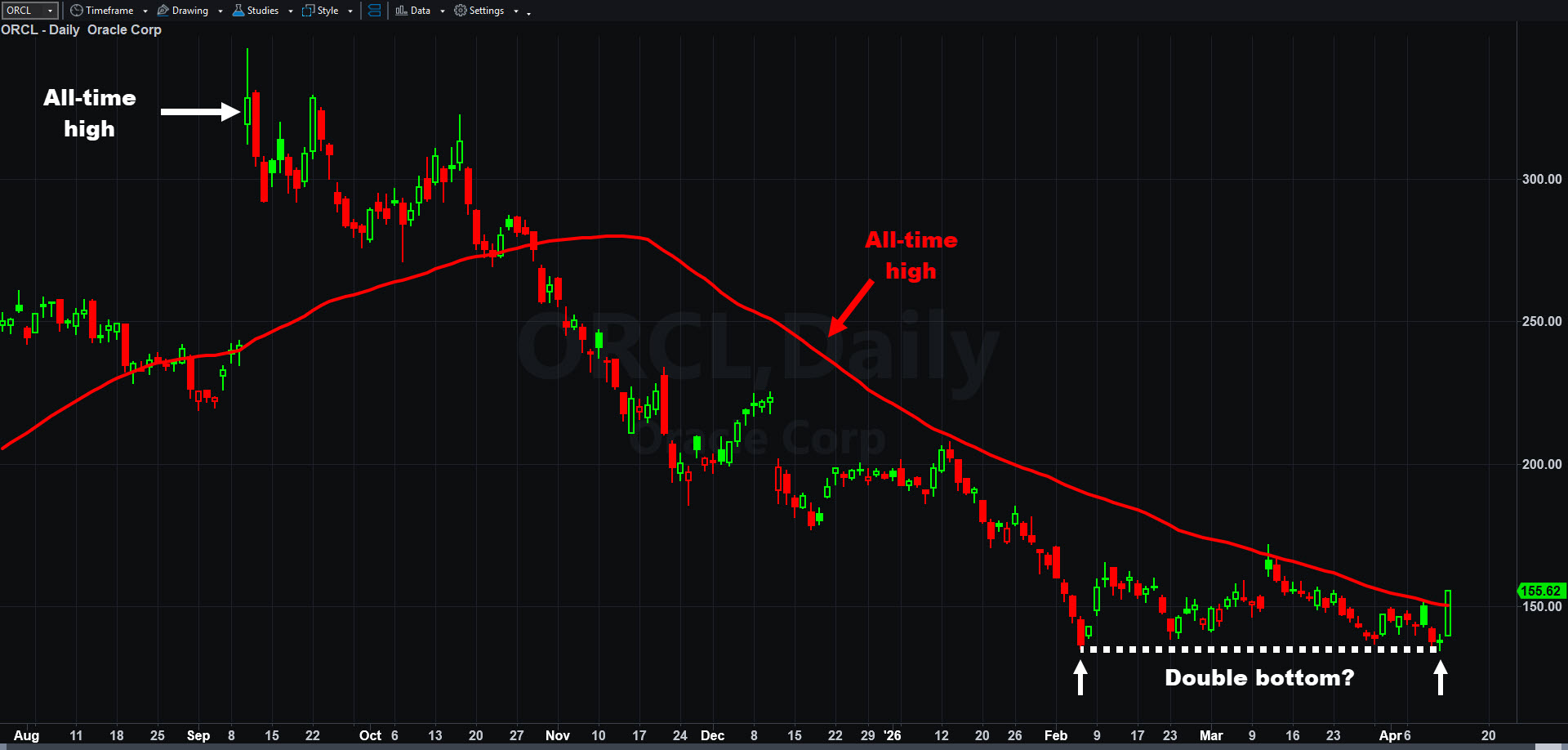
Oracle (ORCL), daily chart, with select patterns and indicators.
The stock also closed above its 50-day moving average for the first time since October 28. Combined with the potential double bottom, could investors look for a rebound?
Overall option volume in the name was triple the daily average, according to TradeStation data. Calls accounted for a bullish 74 percent of the total.
Options trading is not suitable for all investors. Your TradeStation Securities’ account application to trade options will be considered and approved or disapproved based on all relevant factors, including your trading experience. See www.TradeStation.com/DisclosureOptions. Visit www.TradeStation.com/Pricing for full details on the costs and fees associated with options.
Margin trading involves risks, and it is important that you fully understand those risks before trading on margin. The Margin Disclosure Statement outlines many of those risks, including that you can lose more funds than you deposit in your margin account; your brokerage firm can force the sale of securities in your account; your brokerage firm can sell your securities without contacting you; and you are not entitled to an extension of time on a margin call. Review the Margin Disclosure Statement at www.TradeStation.com/DisclosureMargin.